The ocean is everything
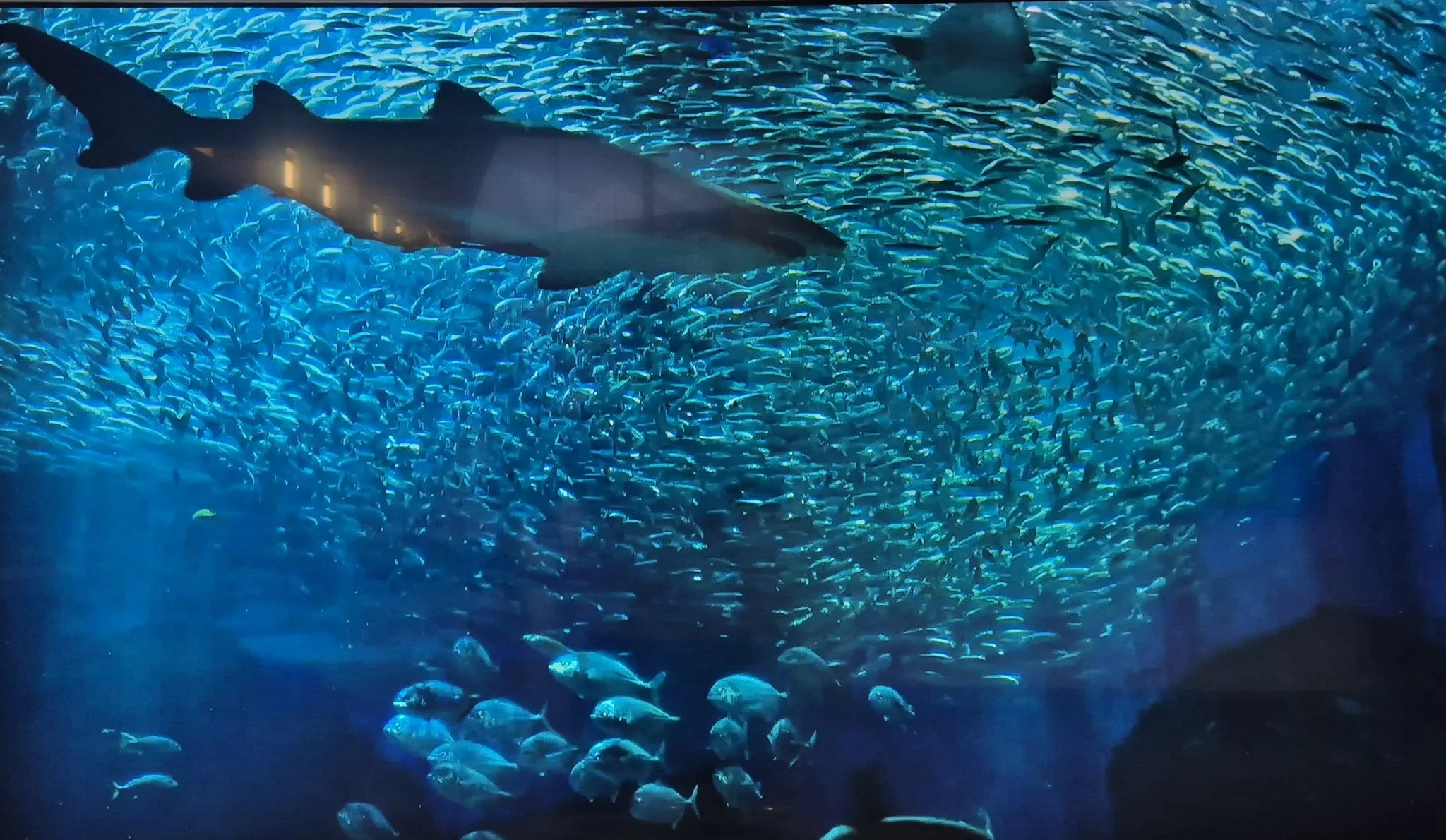
“The ocean is everything…”
With Chris Wardman busy at the iAero Centre focusing on drones, I had the pleasure to host the January ElectroHub meeting, in the wonderful surroundings of the National Oceanography Centre, Southampton.
The NOC is an innovation ecosystem which helps to accelerate ocean technology from idea to impact. They have strong partnerships with academia, industry and government, with partners including Barclays Eagle Labs, Innovate UK, Maritime Solent, University of Southampton, Solent University, Dstl and QinetiQ.
Copper Turtle is one of over 50 members who utilise the facilities and services, one of which is ‘Tech Transfer’, commercialising innovation for the blue economy:
Works with NOC researchers and partners to identify IP with commercial potential.
Supports IP protection, valuation and licensing.
Propels commercially relevant innovations from lab to end users through licensing or spin-out creation.
Delivered with Ploughshare and aligned with government innovation frameworks.
We were also very lucky to be able to tour around some of the labs and workshops:
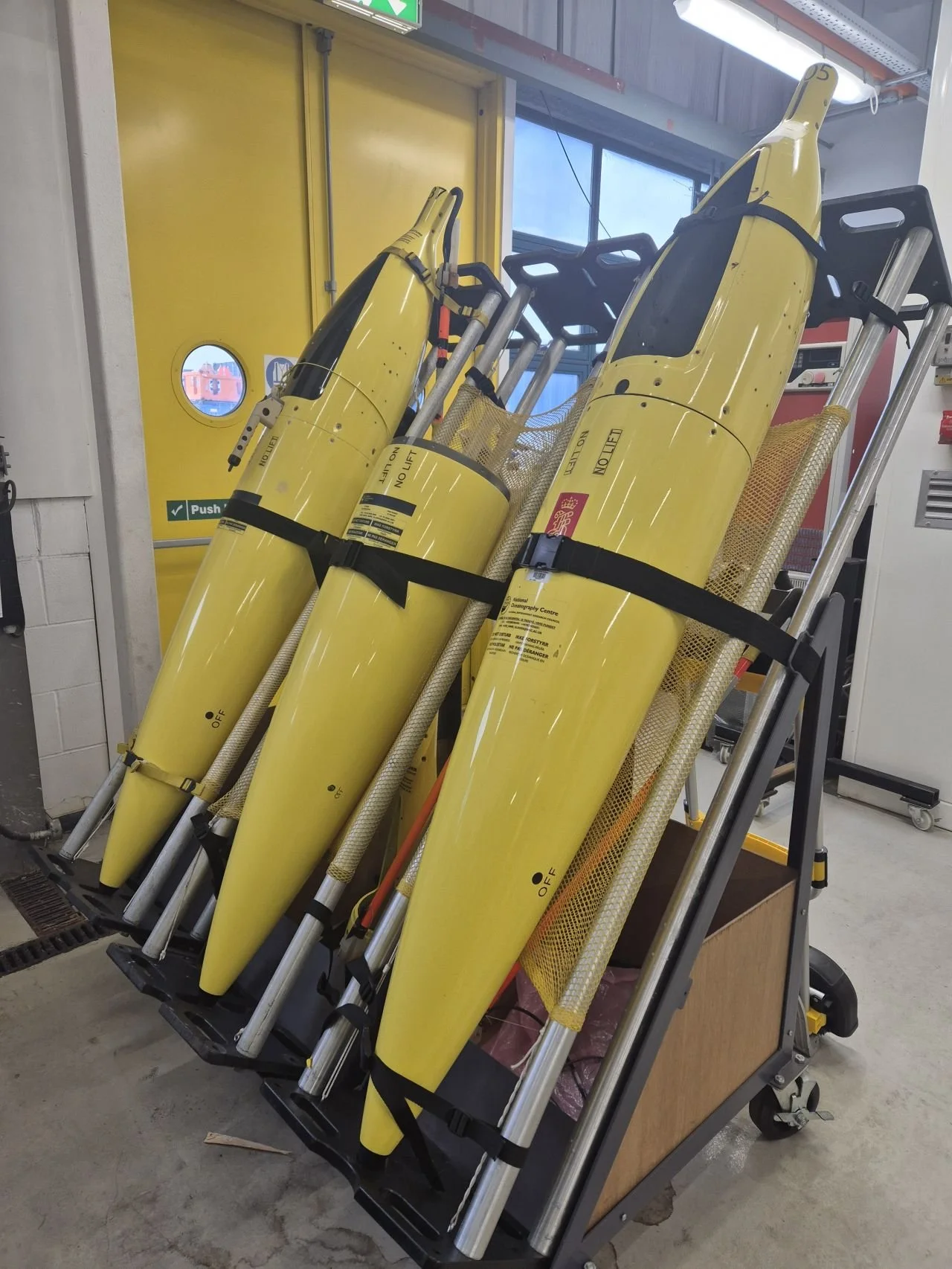
Gliders Workshop – two different designs of glider, these typically deploy for 4 months, working autonomously in harsh environments such as long range offshore, in the path of hurricanes and under ice. They record data on essential ocean variables such as, temperature, oxygen, conductivity (to calculate salinity), chlorophyl, optical back scatter and acoustics to listen for marine mammals.
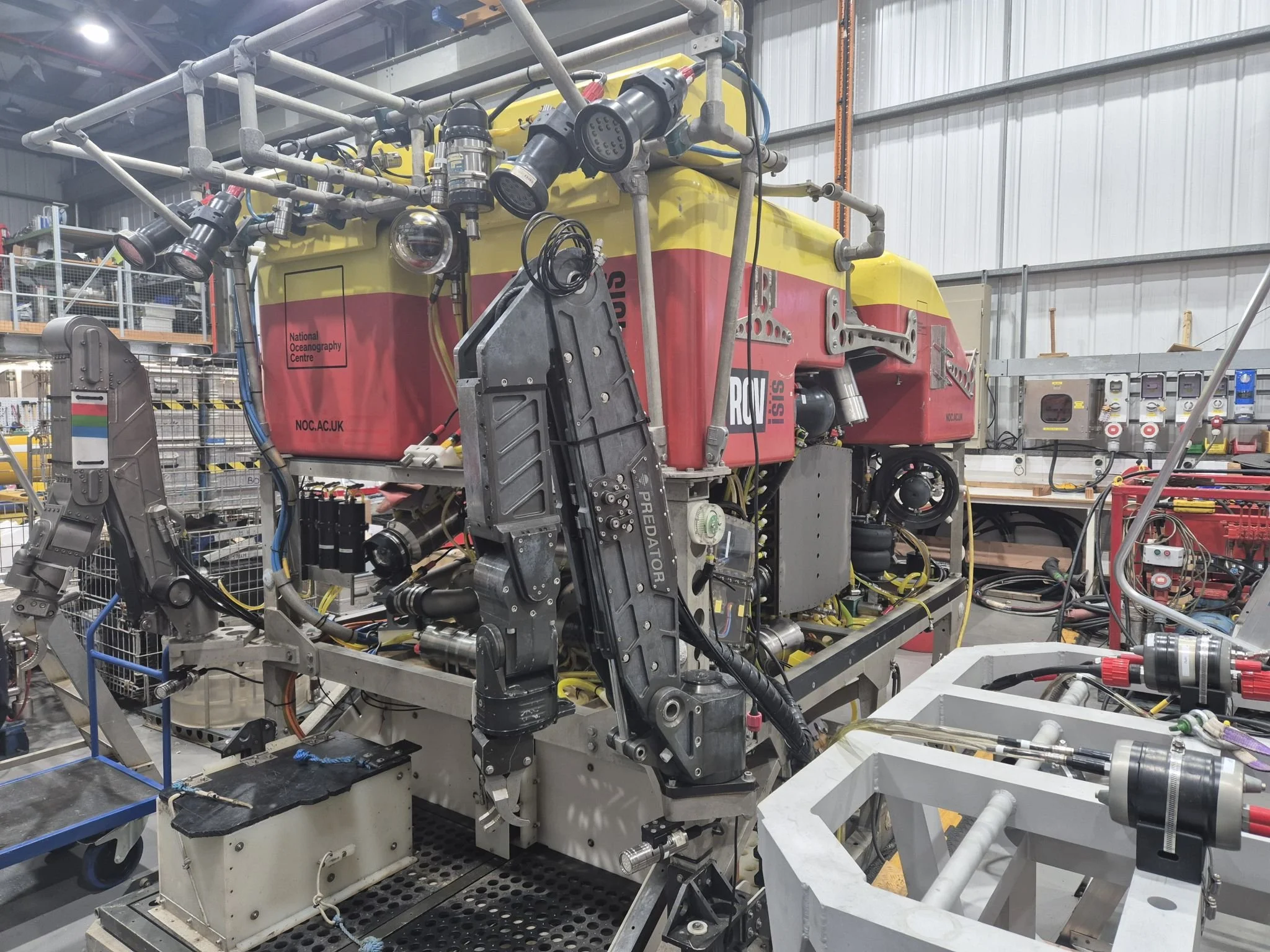
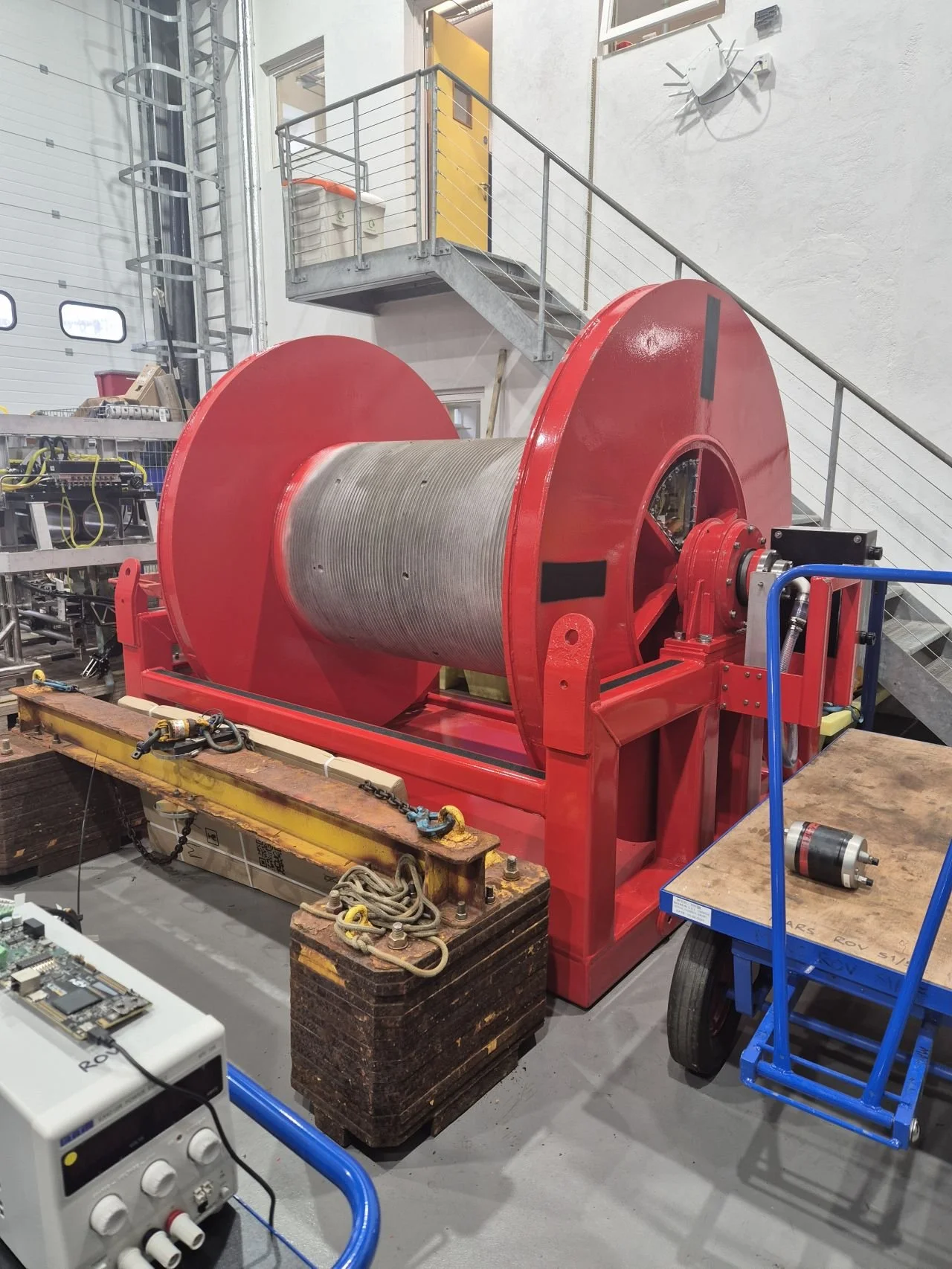
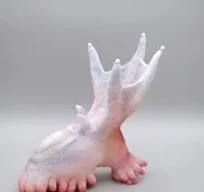
Deep Ocean Workshop – ISIS ROV takes 7-8 people to operate and has a maximum depth capacity greater than most, at 6,500m. It connects to a 10k ‘umbilical’ cable, has 3 HD cameras, 2 sets of lasers, 2 manipulator arms and a hoover to take rock and sediment samples. Top discoveries include the Needle Felted Barbie Pig (check out the photo I found on Google, it’s quite a remarkable looking thing!) as well as the formal barrier line between Asia and Oceania and hydrothermal vents.
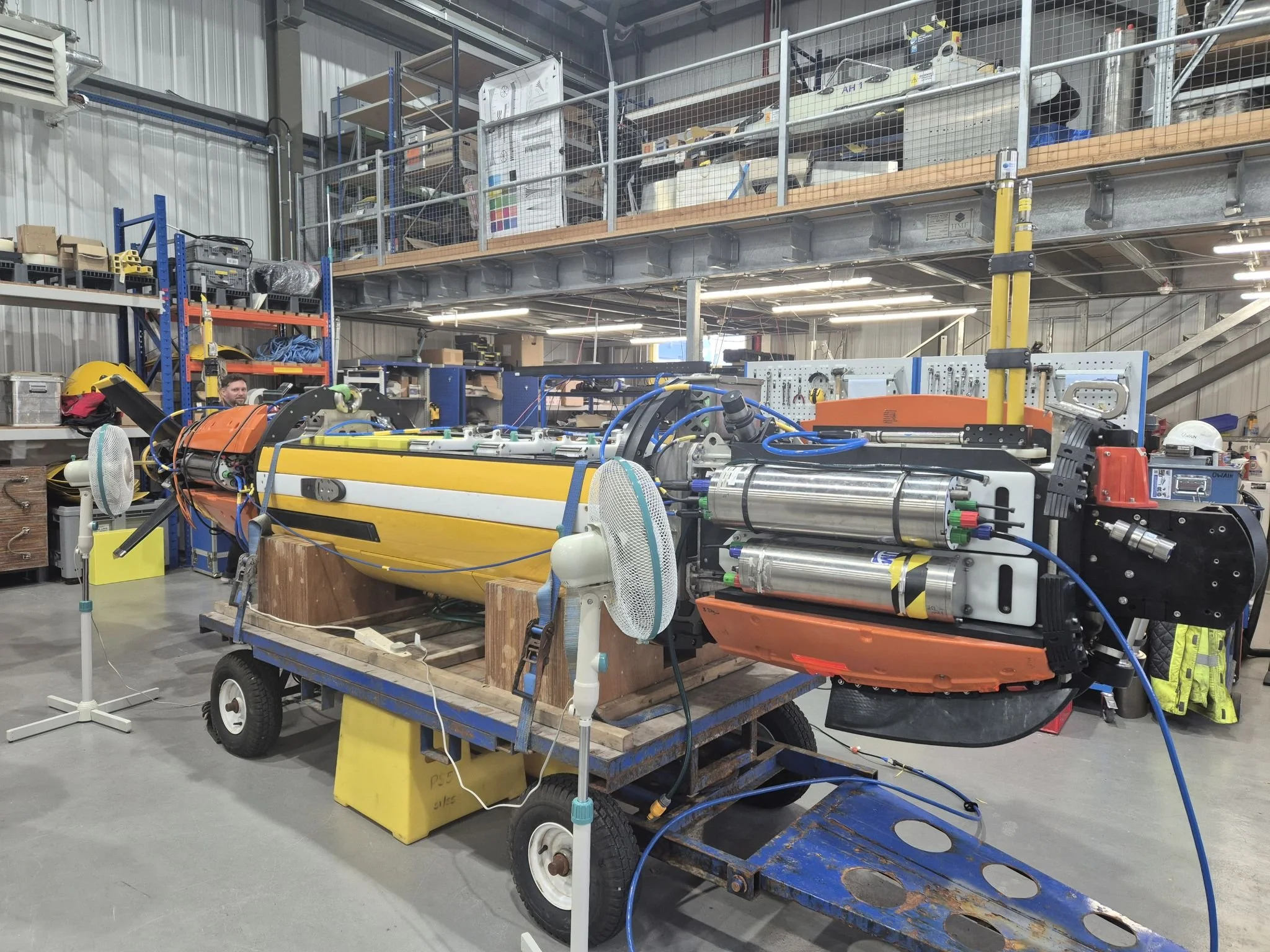
Autosub 5 – Boaty McBoatface’s bigger sibling! Though commissioned for 6000m deep water operations, it is rapidly configurable for 2000m under-ice missions. With high power sensors, including state-of-the-art sonars and imaging systems, it is used to image the seabed in high resolution by operating multi-beams used for topographic mapping.
ElectroHub is a small group of organisations who meet to share what we are working on in our businesses, and to seek opportunities to combine our expertise and collaborate. Today we welcomed Chris King from P&M Packing and Leif Klingsheim from ecoSUB Robotics.
Huge thanks to Mark Hamson MIEx, Charn Richardson for hosting us today.
Darrin Laishley, Kevin Watkins, Steve T., Garry Hudson and Sean Redshaw.